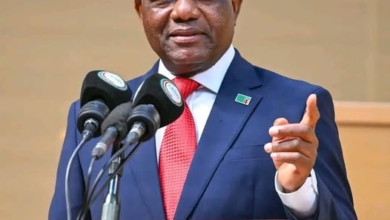


Zambia has forfeited an estimated US$200 million in revenue after introducing tax relief measures to shield citizens and businesses from rising fuel prices triggered by the Middle East conflict, Finance Minister Situmbeko Musokotwane has revealed.
Speaking at the ongoing Spring Meeting of the International Monetary Fund and the World Bank Group, Dr. Musokotwane says the government suspended excise duty and zero-rated Value Added Tax on petroleum products to ease the burden of escalating energy costs.
The Minister has disclosed that while the measures have provided relief, they have come at a significant fiscal cost, with the Treasury losing approximately US$200 million in potential revenue.
Addressing delegates at the IMF Africa Fiscal Forum, the minister has warned that African economies face a heightened risk of an energy crisis within the next 12 months due to the ongoing conflict in the Gulf region.
He says such a development could further drive inflation, increase production costs, and strain already tight government budgets.

Dr. Musokotwane has called for a shift in how African countries deploy fiscal policy, urging governments to move beyond short-term crisis management toward long-term economic transformation.
The Finance Minister has emphasized the need to strengthen productivity, expand energy security, and build more resilient economies.
Drawing on Zambia’s experience, he has highlighted reforms aimed at improving the efficiency of public spending, including the removal of generalized fuel subsidies in favor of targeted investments such as free education and social services.
He has also pointed to the use of digital systems in agricultural support programmes to reduce waste and improve the targeting of beneficiaries.
The minister, has however, stressed that Africa’s core challenge lies in its limited productive capacity and declining share in global trade, despite abundant natural resources and a youthful population.
He has urged policymakers to use fiscal policy more strategically as a tool not only for financing budgets but also for driving industrialization, enhancing human capital, and supporting sectors that can boost economic competitiveness.
Dr. Musokotwane has concluded by calling on African countries to focus on building long-term resilience, arguing that the continent’s future depends on its ability to transform its economic structures rather than merely respond to recurring crises.
The remarks underscore Zambia’s dual approach of cushioning immediate economic pressures while pursuing structural reforms aimed at sustaining long-term growth.
By Rachel Mumba