

The Non-governmental Gender Organisations’ Coordinating Council (NGOCC) has condemned what it describes as the secretive assent and enforcement of the Public Gathering Act of 2026, warning that the development threatens democratic accountability and constitutional freedoms ahead of Zambia’s August general elections.
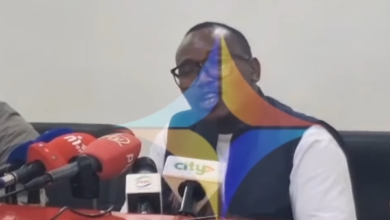
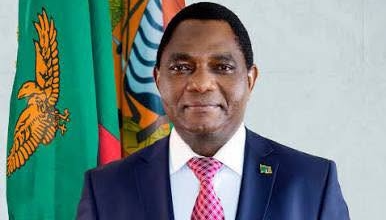
In a statement issued today, NGOCC Executive Director Anne Mbewe-Anamela has expressed concern over reports that President Hakainde Hichilema had already assented to the Public Gathering Bill, making it law without a formal public announcement by government.
Ms. Mbewe-Anamela says the enactment of a law with significant constitutional implications without adequate public disclosure is deeply troubling and undermines principles of transparency and the rule of law.
She argues that the Bill was rushed through Parliament without meaningful stakeholder scrutiny and that interested parties were left with limited options of either accepting the proposed legislation or reverting to the repealed Public Order Act.
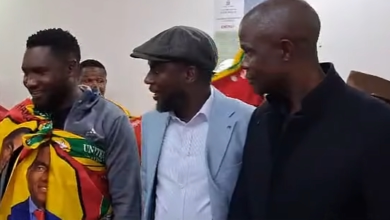
NGOCC further cites reports from Mazabuka, where police allegedly invoked Section 9 of the new law to disperse supporters of former UPND Member of Parliament Gary Nkombo and prevent the launch of his independent campaign for the Mazabuka Central parliamentary seat.

The organisation says the use of a law that has not been publicly announced to restrict political activities raises serious concerns about legality, fairness and the exercise of state power.
Ms. Mbewe-Anamela notes that while government has openly communicated legislation relating to free education, pensions and retirement security, it has remained silent on a law affecting the constitutional right to assemble as provided for under Article 21 of the Constitution.
She describes the timing of the law’s implementation as worrying, especially with the country preparing for the August 2026 general election.
The NGOCC says women candidates, independent aspirants, civil society organisations and civic educators require the freedom to organise, campaign and engage with citizens, warning that any selective or opaque application of the law could undermine public confidence in the electoral process.
By Mulenga Chipampe Makasa