STATE HOUSE REJECTS ZCCB CLAIMS OF NATIONAL CRISIS, DEFENDS ZAMBIA’S ’s DEMOCRATIC MANDATE

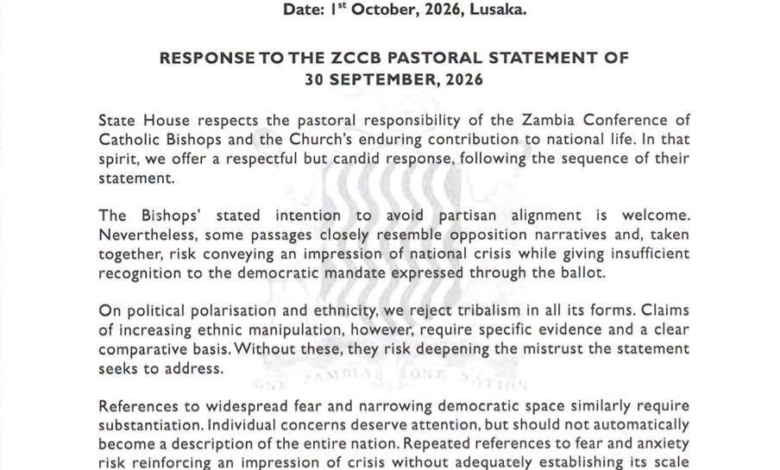
State House has rejected the Zambia Conference of Catholic Bishops’ claims of increasing political polarisation, ethnic manipulation, widespread fear and shrinking democratic space, arguing that such assertions require specific evidence and risk creating an impression of a national crisis.
In a detailed response to the ZCCB pastoral statement issued on September 30, 2026, State House says while it respects the Church’s pastoral responsibility and its longstanding contribution to national life, some portions of the statement closely resemble opposition narratives and give insufficient recognition to the democratic mandate expressed through the ballot.
Chief Communications Specialist Clayson Hamasaka says State House rejects tribalism in all its forms but maintains that claims of increasing ethnic manipulation must be supported by evidence and a clear comparative basis to avoid deepening mistrust.
He further argues that individual concerns about fear and the narrowing of democratic space should not automatically be presented as a reflection of the entire nation, warning that repeated references to anxiety and crisis could inflame public emotions and steer citizens towards a particular political conclusion.
On the 2026 general elections, State House maintains that electoral grievances alone cannot invalidate the citizens’ democratic decision, stressing that any concerns about the credibility of the process should be presented through appropriate institutions, backed by evidence of material failures and their impact on the outcome.

It says broad doubts about the elections risk delegitimising the choices made by voters.
Regarding access to justice, opposition participation and arrests, State House insists on the need to distinguish lawful accountability from political persecution, emphasising that an arrest does not establish guilt or automatically amount to persecution, regardless of the accused person’s political or religious standing.
It says allegations of unlawful detention and abuse must be investigated individually and that lawful arrests should not be characterised as abductions.
While welcoming the Bishops’ appeal for dialogue, State House says such engagement must respect the electoral verdict and strengthen national cooperation without disregarding the citizens’ democratic decision or lawful avenues for resolving disputes.
It has also described proposals on civic education, institutional accountability and reconciliation as areas for cooperation, provided these are pursued on the basis of verified facts and respect for institutional independence.
On the timing of the pastoral statement, State House has expressed concern that its proximity to court proceedings involving a prominent member of the clergy could have an effect on public opinion.
However, it acknowledges that timing alone does not establish an intention to influence the proceedings, while cautioning that portrayals of pervasive fear and institutional failure could generate public pressure around a matter that requires independent determination.
Mr Hamasaka says the dignity of the accused person, the presumption of innocence and the right to a fair hearing must be protected, while investigators, prosecutors and the courts must be allowed to discharge their responsibilities without interference.
State House has further urged the Church to use its pastoral influence to promote truth, compassion and peace, saying its voice should calm emotions, encourage independent judgement and guide citizens towards peaceful coexistence rather than create fear or pressure.
They have reaffirming the need for truthful and proportionate public communication, respect for the democratic mandate and equal justice for all, while recognising the shared responsibility of national institutions and the Church to inspire hope and promote unity.
By Victoria Kayeye Yambani