
Consumer Unit and Trust Society (CUTS) International Lusaka says consumers must be treated with care and protected from the effects of changes to fuel-related taxes, warning that higher fuel prices can put additional pressure on household incomes, transport costs, food prices and small businesses.
In a statement, CUTS Consumer Welfare Officer Victor Sikombe says although Government needs to raise revenue, changes to fuel-related taxes can have effects that extend well beyond the fuel sector.
He says higher fuel prices can increase the cost of public transport and the movement of goods, with potential knock-on effects on the prices of food and other basic commodities.
Mr Sikombe was commenting following the latest fuel price adjustment by the Energy Regulation Board, ERB.
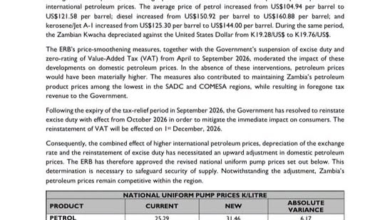
The price of petrol has increased by K6.17, from K25.29 to K31.46 per litre, while diesel has risen from K26.86 to K33.27 per litre.

The price of kerosene has also gone up from K27.02 to K29.76 per litre.
The new prices took effect at midnight on 30 September 2026.
CUTS says the concern goes beyond what consumers pay at filling stations because fuel is used across almost every part of the economy, including public transport, farming, manufacturing and the distribution of goods.
CUTS says a sustainable fuel pricing system should not only take into account international market conditions and Government revenue needs, but also the impact of fuel prices on household incomes, businesses, transport costs and the prices of essential goods.
By Best Jere