

Zambia has positioned its participation at the 2026 Spring Meetings of the International Monetary Fund and the World Bank Group as a strategic push to consolidate economic reforms, strengthen investor confidence, and accelerate private-sector-led growth.
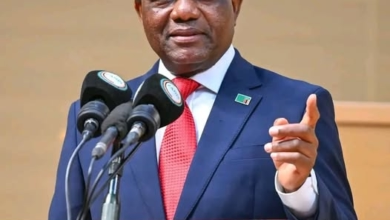
Minister of Finance and National Planning, Situmbeko Musokotwane, says the country’s presence in Washington, D.C. is not ceremonial but focused on deepening economic governance and translating reforms into tangible development outcomes.
The high-level delegation is attending the 2026 IMF–World Bank Spring Meetings 2026 amid a challenging global environment marked by slower growth, tight financial conditions, and rising debt pressures.
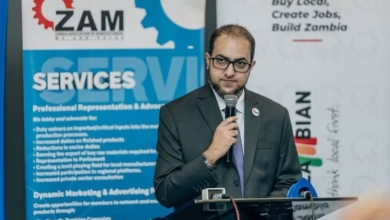
Zambia’s Ambassador to the United States, Chibamba Kanyama, says the country’s reform trajectory is already strengthening international confidence and attracting investor interest.
He has noted that engagements such as the U.S.–Zambia Investment Roundtable will help connect global capital to key sectors including critical minerals, infrastructure, and water security.

Zambia’s participation is anchored on consolidating gains under the IMF-supported Extended Credit Facility programme and advancing reforms under the G20 Common Framework for Debt Treatment.
The broader goal is to transition from macroeconomic stabilisation to sustained growth, job creation, and inclusive economic transformation.
The delegation includes key economic officials such as Secretary to the Treasury Felix Nkulukusa, Bank of Zambia Governor Denny Kalyalya, and other senior government and financial sector leaders.
During the meetings, Zambia will participate in high-level IMF and World Bank sessions, including the International Monetary and Financial Committee and African Consultative Group meetings with IMF Managing Director Kristalina Georgieva and World Bank Group President Ajay Banga.
The delegation is also expected to hold bilateral discussions with global financial institutions and investors, including Morgan Stanley, Bank of America, Barclays, JPMorgan Chase, and Standard Chartered, as part of efforts to unlock investment and expand fiscal space.
By Rachel Mumba