

The Media Institute of Southern Africa (MISA) Zambia has convened a multi-stakeholder meeting aimed at developing a standardized framework for identifying and grading media and digital rights violations in the country, bringing together key institutions including the Human Rights Commission, Zambia Police, civil society organisations, and media bodies to foster inclusive dialogue and consensus building.
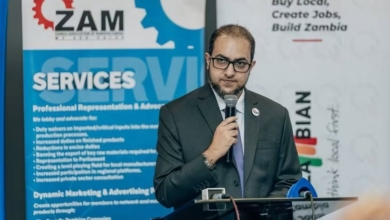
Speaking during the opening session, MISA Zambia National Director Austine Kayanda explained that the objective of the meeting is to collectively identify, define, and standardise categories of violations while establishing a structured system to assess them based on severity, impact, and urgency.
He noted that the gathering is both timely and necessary, as journalists and media institutions in Zambia continue to face increasing challenges such as harassment, intimidation, arbitrary arrests, and censorship.
Kayanda added that these challenges often stem from the media’s watchdog role in promoting transparency, accountability, and good governance, which has, in turn, exposed media practitioners to heightened risks.
Meanwhile, MISA Zambia Board Chairperson Lorraine Chisanga echoed similar sentiments, stressing the urgent need for a coordinated and structured approach to addressing violations against journalists.

Chisanga said media organisations in Zambia have increasingly faced hostility from various actors, including government authorities, political figures, and business leaders, with violations ranging from unlawful detentions and harassment to threats of litigation and censorship attempts—which, she warned, not only undermine media freedom but also weaken democratic governance by eroding transparency, accountability, and public trust.
Chisanga further pointed out that despite ongoing efforts to document and respond to violations, the absence of a standardised framework has limited the effectiveness of monitoring systems and weakened coordinated responses.
She expressed confidence that the engagement will lay a strong foundation for a more coordinated, responsive, and effective system for protecting media freedom and digital rights in Zambia, promoting a safer and more enabling environment for journalists while strengthening freedom of expression and democratic development in Zambia.
By Mulenga Chipampe Makasa